

What if we become one with the electrode?

This is the philosophical approach of one of the newest neurotechnology startups: Axo Neurotech. Started by two British scientists from Science and SpaceX (Dr. Amy Rochford and Nathan Jackrazi), Axo has an ambitious timeline for BCIs. While most companies limit themselves to tackling paralysis and other nervous system afflictions, Axo imagines a world where BCIs are “a routine layer of healthcare and human-machine interaction.” How is this small team in Palo Alto, CA going to transform the industry?
With a combination of two strategies: biohybrid devices and the biological upgrade path.
Biohybrid Devices
Electrodes in the brain are a serious biocompatibility concern. Imagine how your body would react to sticking a firm, sharp square fitted with a porcupine worth of electrodes in your soft brain. The body recognizes the mismatch in materials, and glial cells start to surround and engulf the electrode to protect the brain, which weakens the signals traveling between the brain and the device. As you move about your day, the electrodes can also damage neurons and cause scarring. Electrodes have been shown to last years, but can this last a whole lifetime?
Different companies address this in different ways. Neuralink and Axoft build soft electrodes to avoid damaging cells and triggering an immune response. Synchron avoids the brain entirely by inserting electrodes through blood vessels. Axo’s strategy is one of xenia, or hospitality. An Axo electrode array comes with live cells inside of it, which grow and integrate with the brain’s native neurons. Ideally, your own neurons never have to directly interface with an electrode; just with cultured cells. It’s like building a pipe from a reservoir to your house instead of filling your bottle on the spot and contaminating the water supply.
This strategy comes with major challenges. They need to ensure the body does not mount an immune response to the new cells themselves. This may require immunosuppressant drugs. However, if they can culture friendly cells, then this new biohybrid device should provide much longer-lasting signals without causing damage or degradation.
Biological Upgrade Path
Even if you have the technology ready, it’s very hard to go straight to human testing in the brain. However, this strategy lends itself to easy early testing in rat muscle cells, as in this study. The team implanted electrodes fitted with human-derived stem cells into the forearms of rats. Initially, there was no signal to record, but after four weeks of cell growth, they had a working BCI. Not only that, they recorded better signals than normal electrodes, because they avoided scarring. They observed the rats for 28 days, but could presumably measure them for longer.
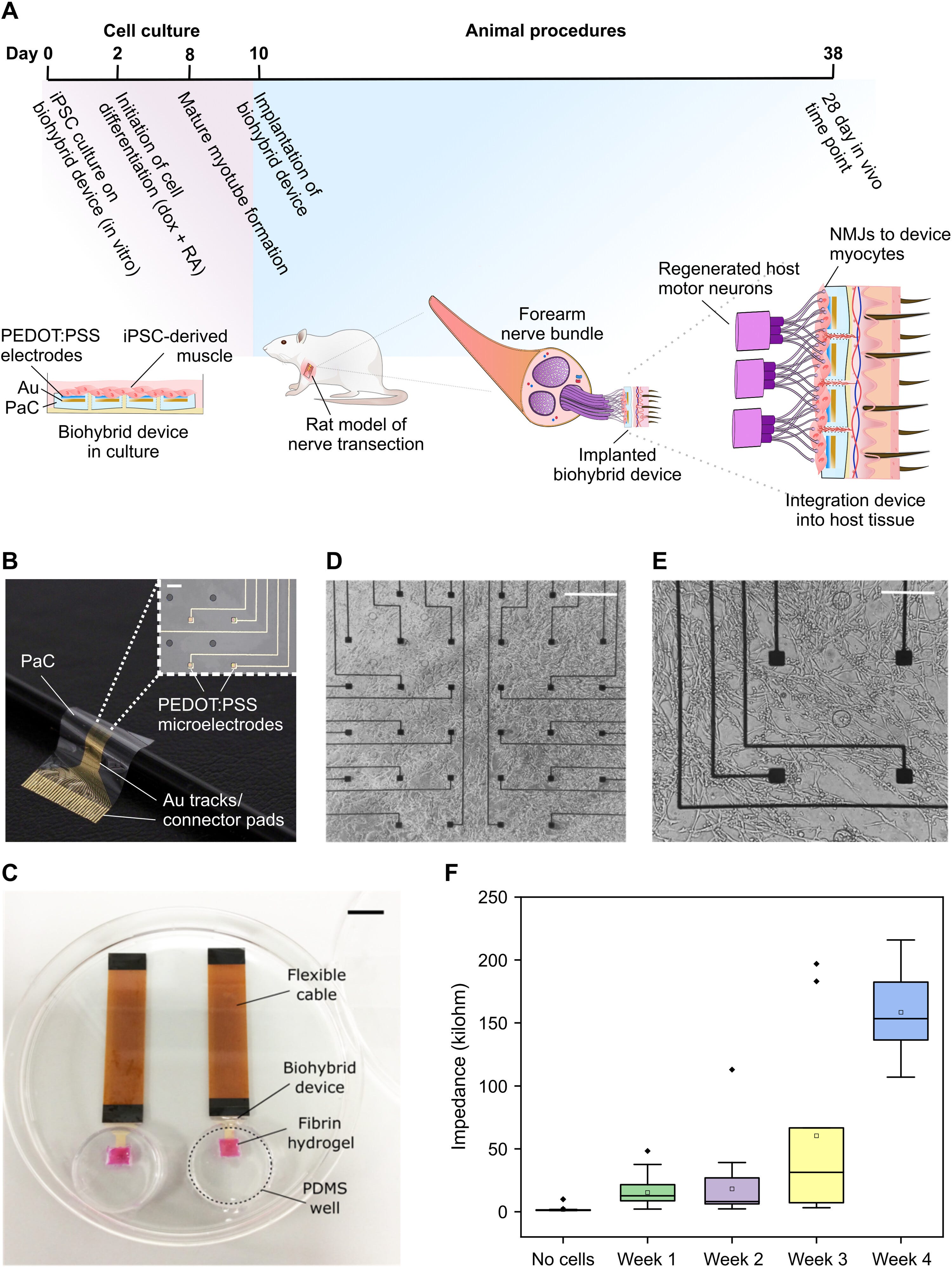
This figure shows the timeline of the experiment and some images of the electrodes. The team does record a large increase in impedance to the hundreds of kilohms, which is typical of a neural interface. I’m curious if that keeps increasing with further testing, because it could be a sign of scarring or other negative interactions.
Don’t lose sight of Axo’s ambitions. The idea isn’t to stay on rat forearms, but to prove the technology in easier studies like this before they move up to humans and brain cells, which are trickier to test. That is the biological upgrade path. Axo has a long way to catch up to giants like the CEO’s alma mater of Science, but they have a plan to get there as fast as possible. I hope they reach their goal of everyday human augmentation.